Inter Milan and Atalanta, two clubs that have redefined success in Italian football over the past decade. Though traditionally associated with different levels of prestige, both clubs, known as the Nerazzurri, have established themselves as powerhouses in Serie A, thanks to innovative strategies, visionary ownership, and astute management.
This article delves into how Inter and Atalanta have risen to the top, analyzing their philosophies, key decisions, and the people who have driven their success.
Inter Milan: A Legacy Rebuilt
Inter Milan, one of Italy’s most decorated clubs, endured a difficult period after their historic 2009/10 treble-winning season. Years of inconsistency and financial struggles saw the club fall behind its traditional rivals. However, the last decade has marked a resurgence for Inter, highlighted by their 2020/21 Serie A title under Antonio Conte and continued success in subsequent seasons.
In May 2024, Inter’s ownership transitioned to Oaktree Capital Management, following years under the control of Suning Holdings Group. The change brought renewed financial stability and investment focus, allowing Inter to remain competitive both domestically and in Europe.
A pivotal moment in Inter’s resurgence was the appointment of Beppe Marotta as CEO of Sport in 2018, shortly after he was dismissed by Juventus. Known for his sharp eye in the transfer market and strategic planning, Marotta played a crucial role in building a competitive squad without reckless spending.
Under his leadership, Inter executed several key signings, including Romelu Lukaku, Achraf Hakimi, and Nicolò Barella, while also securing free transfers like Hakan Çalhanoğlu and Henrikh Mkhitaryan. Marotta’s ability to negotiate favorable deals and manage player contracts efficiently helped Inter assemble a title-winning team while maintaining financial stability.
His influence extended beyond transfers, as he also ensured a seamless transition between coaches, helping the club remain competitive even after managerial changes.

Inter’s resurgence began with Antonio Conte, who brought a winning mentality and tactical pragmatism that culminated in their first Scudetto in over a decade. Conte’s departure in 2021 could have derailed their progress, but Marotta’s decision to hire Simone Inzaghi ensured continuity. Inzaghi introduced a more balanced style of play and led the club to multiple domestic trophies, including the Coppa Italia.
Inter has built a well-rounded squad by blending experienced stars like Lautaro Martínez, Hakan Çalhanoğlu, and Milan Škriniar with emerging talents like Alessandro Bastoni. This balance has allowed them to stay competitive in Serie A and the Champions League.
Despite financial challenges in previous years, Inter’s smart transfer dealings have kept them competitive. High-value sales, such as those of Achraf Hakimi and Romelu Lukaku, were followed by strategic reinvestments, ensuring squad depth without overspending.
Unlike Inter, Atalanta was not traditionally considered a top-tier club. However, under the leadership of owner Antonio Percassi and head coach Gian Piero Gasperini, Atalanta has transformed from a mid-table team into a consistent contender in Serie A and Europe.
The Percassi family’s long-term vision has been key to Atalanta’s rise. By investing in modern infrastructure, including their world-class training facilities and youth academy, they have created a sustainable football model.
Since his appointment in 2016, Gian Piero Gasperini has implemented a unique, high-intensity style of play. His signature 3-4-3/3-5-2 formation, which emphasizes quick transitions and high pressing, has made Atalanta one of Europe’s most exciting teams.
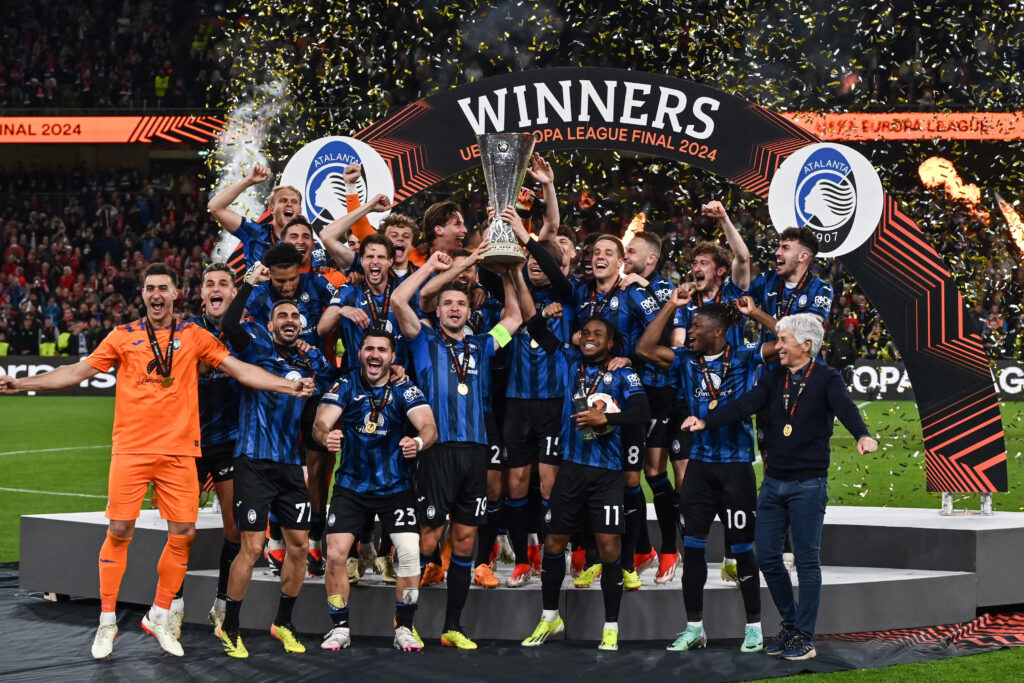
Atalanta has built a reputation for identifying and developing undervalued talents. Players like Robin Gosens, Duván Zapata, and Luis Muriel were signed at modest prices and turned into key performers. Additionally, their youth system has produced promising stars such as Giorgio Scalvini and Matteo Pessina.
Unlike traditional top clubs, Atalanta operates with a self-sustaining financial model. They frequently sell high-value players, such as Cristian Romero and Franck Kessié, while reinvesting in emerging talents, ensuring long-term competitiveness.
While both clubs have enjoyed tremendous success, their philosophies differ significantly:
Inter’s approach focuses on building a balanced squad with experienced players and a pragmatic style of play that prioritizes results over aesthetics.
Atalanta’s rise has been built on innovation, attacking football, and an aggressive, fast-paced style. Their focus on player development and tactical creativity has set them apart from more traditional clubs.
Despite their contrasting approaches, both clubs share a commitment to smart management and long-term planning, making them models for success in modern Italian football.
Inter: With a more experienced squad and players like Lautaro Martínez, Barella, and Dumfries, Inter boasts depth and title-winning experience.
Atalanta: Atalanta’s energetic and unpredictable style, coupled with Gasperini’s tactical genius, makes them a formidable opponent capable of causing an upset on any given day.
The dominance of Inter and Atalanta signals a new era in Italian football. While traditional giants like Juventus and AC Milan have struggled for consistency, the two Nerazzurri have set the benchmark for success through smart management, tactical evolution, and financial prudence.
This isn’t just a battle for a trophy, it’s a showcase of how two different philosophies can lead to sustained excellence. Whether it’s Inter’s pragmatic approach or Atalanta’s attacking revolution, both clubs have reshaped the landscape of Serie A and continue to inspire fans across the globe.
Fans can expect an exhilarating contest, as both sides aim to add another chapter to their already impressive stories of dominance.


 ChatGPT
  Perplexity
  Google AI
  Claude
  Grok
Grok