| Date | 18 May 1994 |
|---|---|
| Venue | Olympic Stadium, Athens |
| Result | Milan 4-0 Barcelona |
| Scorers | Massaro 22′, 45′; Savićević 47′; Desailly 58′ |
| Coaches | Fabio Capello (Milan), Johan Cruyff (Barcelona) |
| Milan XI | Rossi; Tassotti, Galli, Maldini, Panucci; Donadoni, Albertini, Desailly, Boban; Savićević, Massaro |
Everyone knew how this final would go. Barcelona were the most exciting team in Europe, Johan Cruyff’s Dream Team with Romário, Hristo Stoichkov, Ronald Koeman and a young Pep Guardiola. Milan were missing their captain, their best defender after him and their greatest striker. The experts expected a Barcelona party in Athens. Ninety minutes later, the party was in red and black, and the score was 4-0.
The 1994 Champions League final remains one of the most stunning performances in the history of the competition, and the perfect symbol of how powerful Italian football had become.
Why were Barcelona the favourites?
Because they played beautiful, attacking football and had just won their fourth Spanish title in a row. Romário had scored 30 league goals that season, Stoichkov was one of the most dangerous forwards in the world, and Koeman’s free kicks had already won Barcelona the 1992 European Cup against Sampdoria at Wembley. Cruyff, never one for false modesty, made it clear he believed his team would win.
Milan, in contrast, looked weakened. They had won Serie A again, their third title in a row under Capello, but with a cautious style built on defence. Over the 1993-94 league season, they scored only 36 goals in 34 games, while conceding just 15.
Who was missing for Milan in the 1994 final?
Almost the entire spine of the defence. Franco Baresi and Alessandro Costacurta, the heart of the most famous back line in the world, were both suspended. Marco van Basten, the greatest striker of his generation, had not played for a year because of an ankle injury that would end his career. On top of that, UEFA rules at the time allowed only three foreign players, so Capello had to leave out Jean-Pierre Papin, Brian Laudrup and Florin Răducioiu.
He chose Marcel Desailly, Zvonimir Boban and Dejan Savićević, moved Paolo Maldini from left-back to centre-back alongside Filippo Galli, and gave the left-back role to the young Christian Panucci. On paper, it looked like a makeshift team.
How did Milan beat Barcelona 4-0?
By pressing them to death. From the first minute, Milan squeezed the space, closed down Barcelona’s midfielders and attacked at speed whenever they won the ball. Desailly, playing as a defensive midfielder, was a wall in front of the back four, and Barcelona’s passing game, so fluid in Spain, never got going.
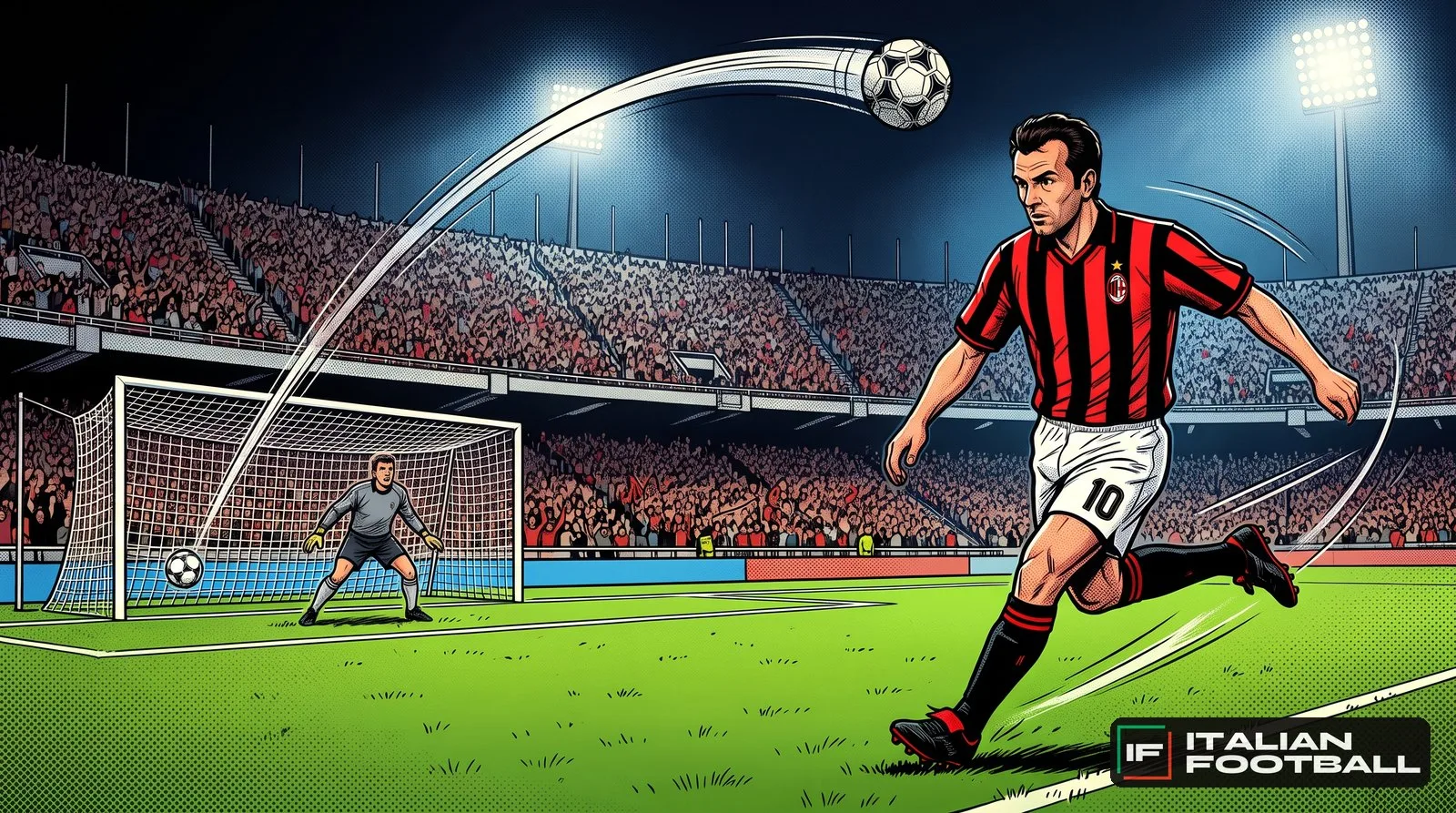
In the 22nd minute, Savićević skipped past his marker on the right and set up Daniele Massaro, who tapped in. Just before half-time, Massaro scored again after a flowing move. Two minutes into the second half came the moment that everyone remembers: Savićević chased a loose ball near the right touchline, and from a wide angle, around 30 metres out, he lobbed the ball over Andoni Zubizarreta and into the net. It was a goal of pure genius.
In the 58th minute, Desailly ran through the middle and curled a shot into the corner to make it 4-0. The rest of the match was a procession. Milan could have scored more.
Why was Savićević’s goal so special?
Because almost nobody else would have tried it. Savićević, a Montenegrin playmaker nicknamed “Il Genio”, had a difficult relationship with Capello, who sometimes questioned his work rate. On the biggest night of the season, he delivered the most creative performance of his career: an assist, a goal from an impossible position and constant danger every time he touched the ball. His lob is still one of the most replayed goals in Champions League history.
Why does the 1994 final matter so much?
It confirmed the dominance of Italian football and of Milan in particular. Between 1989 and 1995, Milan reached five European Cup finals and won three. More importantly, the Athens final showed that Italian tactical intelligence, pressing, organisation and discipline, could destroy even the most talented attacking team in Europe.
For Barcelona, it was the beginning of the end of the Dream Team. For Cruyff, it was a lesson he never forgot. For Milan, it was the peak of the Capello era, a period of total domination at home and abroad. A year later, Milan reached another final, losing to Ajax, and the club would later rebuild under Carlo Ancelotti with stars like Andriy Shevchenko.
How does this final fit into the golden era of Serie A?
It is the high point. In 1994, Serie A was the richest, most competitive and most tactically advanced league in the world, and the Athens final proved it on the biggest stage. Italian clubs reached seven consecutive European Cup and Champions League finals between 1992 and 1998, and the Milan of Capello, together with the experiments of coaches like Alberto Zaccheroni, shaped the way the whole of Europe thought about football. We tell the bigger story in our series on Serie A in the 90s and 2000s.
For anyone who watched it, 18 May 1994 is unforgettable. A weakened Milan, a perfect plan and a lob from the touchline. Football does not get much better than that.
Frequently asked questions
Who scored in the 1994 Champions League final?
Daniele Massaro scored twice, Dejan Savićević scored with a lob and Marcel Desailly added the fourth as Milan beat Barcelona 4-0 in Athens on 18 May 1994.
Why didn’t Baresi play in the 1994 Champions League final?
Franco Baresi and Alessandro Costacurta were both suspended for the final, so Capello moved Paolo Maldini to centre-back alongside Filippo Galli.
Who coached Barcelona in the 1994 final?
Johan Cruyff coached Barcelona’s Dream Team, which included Romário, Hristo Stoichkov, Ronald Koeman and Pep Guardiola.