| Full name | Roberto Baggio |
|---|---|
| Nickname | Il Divin Codino (the Divine Ponytail) |
| Late-career clubs | Bologna 1997-98, Inter 1998-2000, Brescia 2000-2004 |
| Serie A goals | 205 |
| Ballon d’Or | 1993, with Juventus |
| Final game | Milan v Brescia, San Siro, 16 May 2004 |
By 1997, many people thought the story of Roberto Baggio was finished. He had won the Ballon d’Or with Juventus, missed the most famous penalty in World Cup history at USA 94, and spent two quiet seasons at Milan, often on the bench. He was 30, his knees were held together by willpower, and the big clubs had moved on.
What followed was one of the most beautiful second acts in football. Away from the giants, at Bologna and especially at Brescia, Baggio played with a freedom and a joy that made him the most loved player in Italy, adored by fans of every club, including the ones he scored against.
How did Baggio revive his career at Bologna?
He chose Bologna in the summer of 1997 for one reason: to play every week and earn a place at the 1998 World Cup. He scored 22 Serie A goals, the best league tally of his career. Bologna finished comfortably in mid-table, Baggio was the best Italian player in the league, and Cesare Maldini had no choice but to take him to France.
At the World Cup he scored twice, including a penalty against Chile, a quiet personal victory after the trauma of Pasadena four years earlier.
What happened during Baggio’s time at Inter?
Inter signed him in 1998 to play alongside Ronaldo, a dream partnership that injuries and constant coaching changes never allowed to flourish. When Marcello Lippi arrived in 1999, the relationship between coach and player broke down quickly, and Baggio spent long periods out of the side.
Yet he gave Inter one last gift. In May 2000, Inter met Parma in a playoff for the final Champions League place, played in Verona. Baggio, barely used by Lippi all season, scored two brilliant goals in a 3-1 win, beating a young Gianluigi Buffon both times. Then he left.
Why did Baggio choose Brescia?
Because of Carlo Mazzone. The veteran coach, a Roman with a fierce temper and a huge heart, promised Baggio freedom on the pitch and respect off it. Brescia were a small club with limited ambitions, and Baggio, at 33, wanted exactly that: a place where he could simply play.
The results were magical. In 2000-01, Brescia finished seventh, one of the best seasons in the club’s history, and reached the Intertoto Cup final. Baggio played behind a front line that included the bison-like Dario Hübner, and in midfield sat a young Andrea Pirlo, on loan from Inter, learning the role that would make him famous.
What was Baggio’s greatest goal for Brescia?
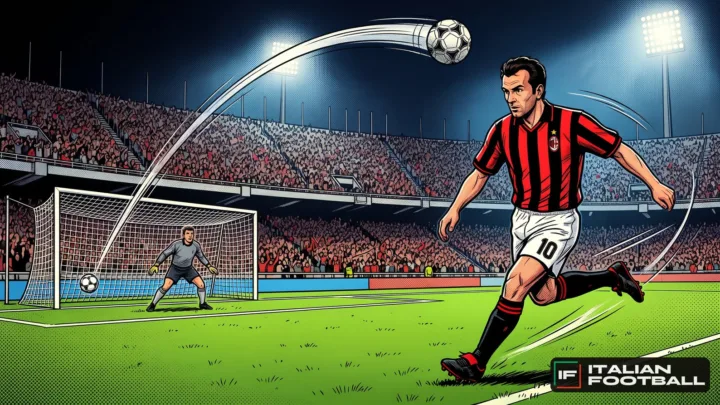
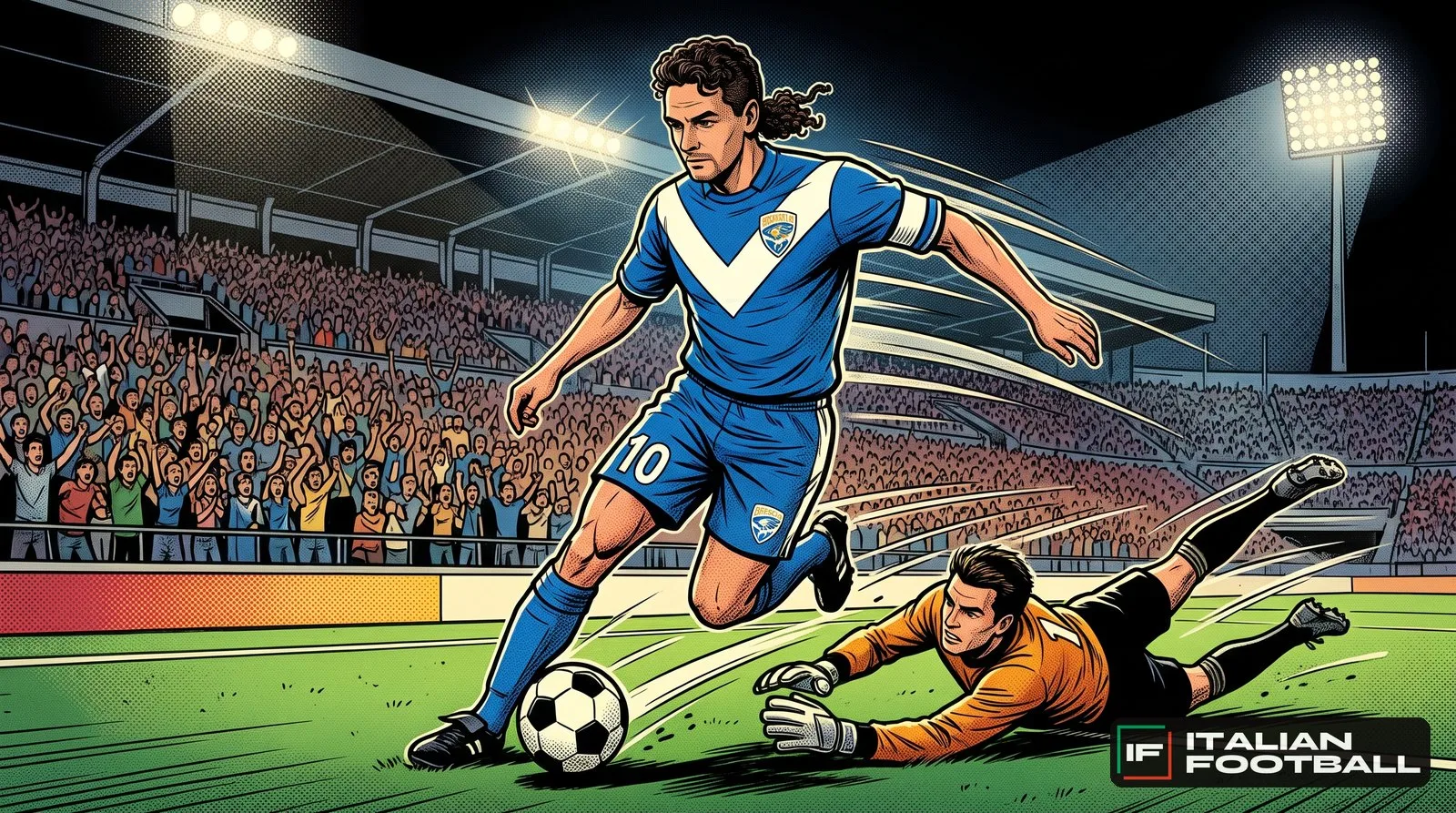
Ask any Italian fan and most will pick the goal at the Stadio delle Alpi against Juventus in April 2001. Pirlo, from deep in midfield, lofted a 50-metre pass over the Juventus defence. Baggio controlled it with one touch while running at full speed, took the ball past Edwin van der Sar with the same movement, and rolled it into an empty net. It was elegance and genius compressed into two seconds, scored against the club where he had won the Ballon d’Or.
Brescia would later add another famous name to the dressing room when Pep Guardiola joined in 2001, turning a provincial club into an unlikely school of world football.
When did Baggio score his 200th Serie A goal?
On 14 March 2004, against Parma, Baggio joined the tiny club of players with 200 Serie A goals, alongside the greatest strikers in the league’s history. He finished his career with 205, at an age when most players have long since retired, and despite a body so battered by knee surgery that he often trained alone just to be ready for Sunday.
How did Baggio say goodbye to football?
His final match came on 16 May 2004 at San Siro against Milan. When he was substituted near the end, the whole stadium stood. Milan fans, Brescia fans and neutrals applauded for minutes, and Paolo Maldini walked over to embrace him. Italy does not agree on much in football, but it agreed on Roberto Baggio.
Why is Baggio still the most loved Italian footballer?
Because he played for the joy of it, and because he seemed to belong to everyone. He played for Fiorentina, Juventus, Milan, Inter, Bologna and Brescia, rivals who hate each other, and fans of all of them claim him as their own. His Buddhist calm, his quiet humility and his refusal to complain about the coaches who left him out all added to the legend.
Above all, he represents the creative soul of an era that was otherwise famous for its defending, which is the paradox we explore in our series on the golden era of Serie A in the 90s. In a league built on discipline, Baggio was pure imagination.
For another number 10 who found his greatest freedom away from the giants, read our story on Gianfranco Zola at Napoli and Parma.
Frequently asked questions
How many Serie A goals did Roberto Baggio score?
Roberto Baggio scored 205 Serie A goals, reaching his 200th against Parma on 14 March 2004 while playing for Brescia.
Why did Baggio go to Brescia?
He joined Brescia in 2000 because coach Carlo Mazzone promised him a central role and freedom on the pitch after difficult years at Milan and Inter.
When did Roberto Baggio retire?
Baggio played his final match on 16 May 2004 for Brescia against Milan at San Siro, where the whole stadium gave him a standing ovation.